
Scooping Dog Poop in Snow: How to Run Winter Routes and Write a Winter Service Policy
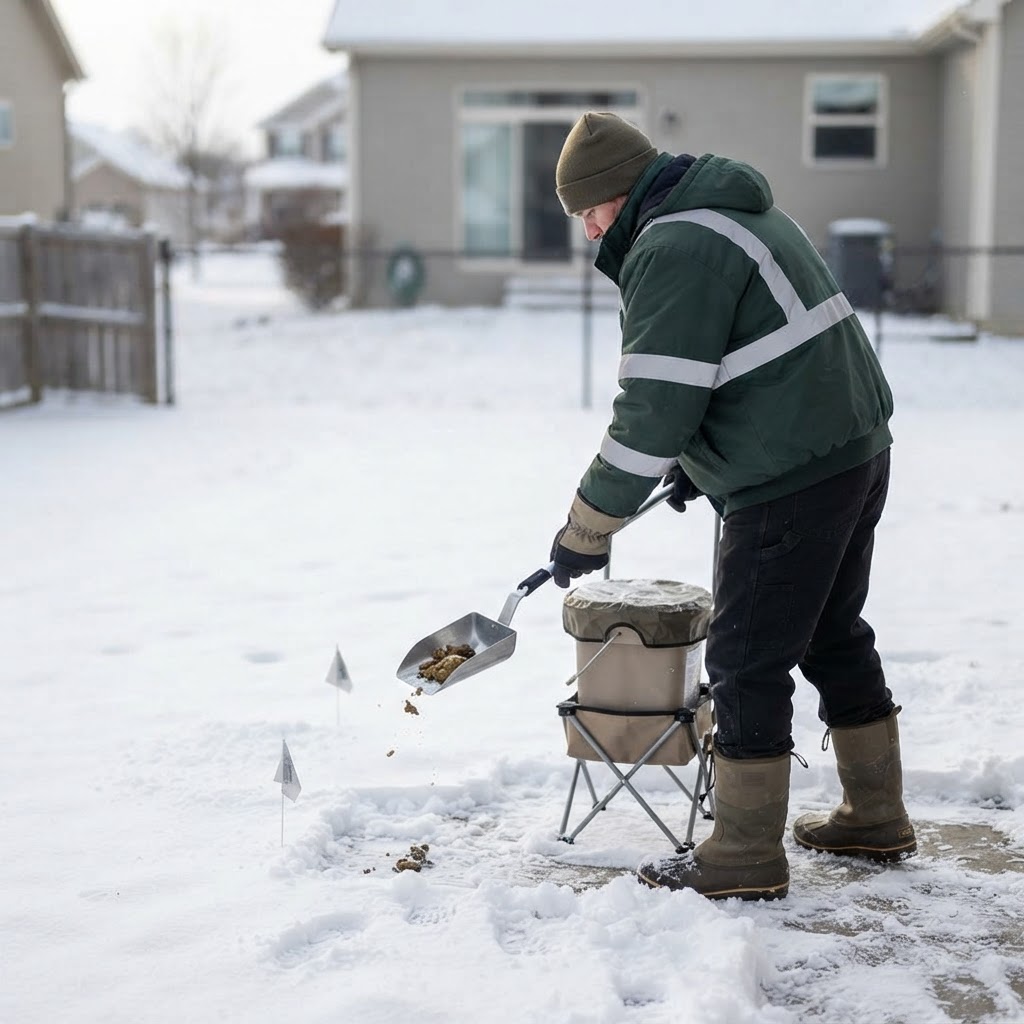
title: "Scooping Dog Poop in Snow: Winter Policy Guide" h1: "Scooping Dog Poop in Snow: How to Run Winter Routes and Write a Winter Service Policy" slug: "scooping-dog-poop-in-snow-winter-policy" meta_description: "Scooping dog poop in snow is doable with limits. Snow thresholds, safety gear, and 4 pooper scooper winter policy models with a template to adapt." excerpt: "Yes, you can scoop in snow, but you need a threshold, a safety plan, and a written winter policy your customers see before the first storm. Here is how to set all three." category: "Routes & Field Ops" target_query: "scooping dog poop in snow" author: "ScooPilot Team" featured_image: "scooping-dog-poop-in-snow-winter-policy.png" featured_image_alt: "Pet waste technician with a rake and bucket walking through a snowy backyard on a winter route" image_headline: "Your Winter Policy Starts Before the Snow" reading_time_min: 9 status: draft
Yes, you can scoop dog poop in snow. Light snow barely slows you down, and frozen waste is often easier to pick up than soft summer piles. Once fresh snow covers the yard, you can't see what you're cleaning, so most operators set a depth threshold, scoop what's visible below it, and skip or reschedule above it.
What decides whether winter goes smoothly is the policy you sent customers before the first storm.
Can you scoop dog poop in snow?
You can, with limits. A dusting usually leaves piles visible as lumps or dark spots. The trouble starts when fresh snow buries everything, and dragging a rake through deep snow mostly moves snow around. One long-time operator who writes about his business says that if a yard is completely covered in fresh snow, he may postpone the visit for a week or two to let it melt, but keeps scooping whenever it's safe to drive.
A reasonable standard, and one recommended by Scoop Start's winter operations guide, is to clean what is visible, accessible, and safe to remove. Put that idea in writing so customers know what a winter visit actually includes.
How much snow is too much to scoop?
There's no industry rule. These are common practice ranges pulled from operator guides and published scooping company policies we reviewed. Treat them as a starting point, not a standard.
| Conditions | What operators commonly do |
|---|---|
| Dusting, piles still visible | Scoop as normal |
| Light fresh snow, some piles hidden | Scoop what's visible, note the rest |
| Around 2 inches of fresh snow or more | Many delay or skip the visit (Scoop Start cites about two inches of fresh snow as one company's trigger) |
| Ice storm, freezing rain, unsafe roads | Pause routes for safety |
| Dangerous cold or wind chill | Many pause routes even with no snow |
Two patterns showed up across the policies we read. First, fresh snow matters more than total depth: old, partly melted snow often leaves piles on top, while a fresh layer hides everything. Second, many policies avoid a hard number and just say "more than a dusting." That gives you flexibility but invites arguments. A specific number is easier to defend.
Pick a number that fits your market. A threshold that works where snow melts in days may be too strict where yards stay covered for months.
The buried waste and spring thaw problem
Snow doesn't make waste go away. It stores it in layers, and when it melts, the customer sees all of it at once. Operators who scoop through winter usually tell customers buried waste gets picked up over the next few visits as it melts.
For yards that sat unserviced all winter, the spring thaw cleanup is a big job. The operator above notes that spring is when customers who didn't pick up all winter call in overwhelmed, and he argues for pricing those cleanups higher because demand peaks. Price it like an initial cleanup, by time and volume, not like a regular visit. Our pricing guide covers how to set first-time and heavy cleanup fees.
Ice, slips, and cold-weather gear
The real winter risk is a fall on icy steps or a slick slope.
OSHA's winter guidance recommends insulated, water-resistant boots with good rubber treads, and says to take short steps and walk slower on ice so you can react when traction changes. Carry slip-on ice cleats.
On cold stress, OSHA's cold stress page lists the injuries to watch for: hypothermia, frostbite, trench foot from cold wet feet, and chilblains. It also explains that wind chill speeds up heat loss, and gives the example of 40°F air with a 35 mph wind feeling like 28°F. OSHA's cold weather quick card advises at least three layers of loose-fitting clothing, insulated gloves and boots, covering your head, and packing extra clothes because moisture increases heat loss.
For employers, OSHA suggests frequent short breaks in warm, dry areas and watching workers for signs of cold stress. On a route, the truck is that warm area.
Winter gear checklist
- Insulated, waterproof boots with deep tread, plus ice cleats
- Base layer, mid layer, and waterproof outer shell
- Insulated gloves, plus a dry spare pair and spare socks in the truck
- Hat or balaclava, hand and toe warmers
- High-visibility outer layer and a headlamp
- Small scraper for frozen gate latches
Some of this overlaps with the basics in our equipment list.
Tech rules: don't force a frozen gate or climb a fence. Note it, take a photo, move on.
This is general safety information, not legal advice. Check OSHA and your state's rules if you have employees.
Shorter days and headlamps
A route that fit easily in October may end in the dark by December. Scooping by flashlight is slow, and you'll miss piles. Start earlier, put your largest yards first, and tighten routes so less of the day is drive time. Wear a headlamp, not a handheld flashlight, so both hands stay free for the rake and bag. If you still run out of light, cut stops rather than rushing the last few.
Frozen waste is easier in some ways
Frozen piles don't smear, they lift cleanly off grass, and there's far less odor. A weekly yard in a cold, dry stretch can go faster than in July. The catch is waste frozen into ice or turf. If it won't come up cleanly, leave it for a thaw and say so in your policy.
How to write a pooper scooper winter policy
There are four common winter service models. Most operators use one or blend two, depending on climate and how much winter cash they need.
Model 1: Keep scooping, skip only above a set threshold
Service and billing continue all winter. You skip only when fresh snow passes your threshold or conditions are unsafe.
- Pros: Steadiest routes. Yards never build up a full winter's worth of waste. Customers who stay are your most loyal.
- Cons: Your techs work in the worst weather. Some customers will complain about paying for a visit where you could only clean part of the yard.
- Cash flow: Close to normal. Some operators charge for skipped snow days because the waste is still there and gets cleaned next visit.
Model 2: Reduced frequency in winter months
Weekly customers drop to every other week, or every other week drops to monthly, for a set winter window. The price drops to match.
- Pros: Less time in bad weather. Customers save money and are less likely to cancel outright.
- Cons: Each visit is heavier. Revenue falls, and you have to switch everyone back in spring.
- Cash flow: Lower but predictable. Easier to plan than a full pause.
Model 3: Pause in winter, resume in spring with a spring cleanup fee
Customers stop service for the season and pay a one-time cleanup fee when they restart. Some published policies give year-round customers spring scheduling priority.
- Pros: No winter route stress. The spring cleanup fee covers the extra labor.
- Cons: You lose recurring revenue for months, and some paused customers never come back. Spring gets crowded with long, heavy cleanups.
- Cash flow: The weakest of the four. Winter income drops, then spikes in spring.
Model 4: Flat monthly rate with credits for skipped visits
Customers pay the same monthly amount all year on autopay. Skipped weather visits are credited on the next invoice or made up with an extra visit.
- Pros: Easiest to explain. Billing never changes, and visible credits build trust.
- Cons: Credits eat into a bad winter month. You need a clean record of which visits were skipped.
- Cash flow: Steady payments, with some leakage in heavy snow months. A "make-up visit instead of credit" version keeps more cash.
Quick comparison
| Model | Winter revenue | Spring workload | Churn risk |
|---|---|---|---|
| Keep scooping, skip above threshold | Near normal | Normal | Low |
| Reduced frequency | Lower, steady | Moderate | Low to medium |
| Pause and resume with fee | Very low | Heavy | Higher |
| Flat rate with credits | Steady, small leaks | Normal | Low |
Sample winter service policy (template)
Edit the bracketed parts. Keep it short enough that customers will actually read it.
Winter Service Policy
We scoop year-round. From [December 1] through [March 15], these rules apply:
- Snow: If there are more than [2] inches of fresh snow on your yard on service day, we will [skip / move] that visit. Waste hidden by snow will be picked up on the following visits as it melts.
- Ice and cold: We may pause routes during ice storms, unsafe roads, or wind chills below [X degrees]. We will text you if your visit is affected.
- What we clean: In winter, we clean what is visible, reachable, and safe to remove. Frozen-in waste will be removed after a thaw.
- Access: Please keep gates unlocked and clear a safe path to the yard.
- Billing: [Your monthly rate continues as normal. Skipped visits are credited on your next invoice / made up with an extra visit.]
- Pausing: You may pause service for winter with [7] days' notice. A one-time spring cleanup fee applies when you restart, based on yard condition.
Sample snow-day text message
Give the reason and what happens next:
Hi [Name], it's [Company]. Fresh snow is over our [2"] limit today, so we're skipping your [Tuesday] visit for safety and visibility. We'll catch up on your next visit [Tuesday 12/16]. Reply with any questions. Thanks!
Tell customers before the first storm, not during it
Explained the morning you skip a yard, your policy reads as an excuse.
Send the policy in November, before the first snow. Email it, text a link, and add it to your website and service agreement. Send one reminder when the first storm is forecast, then text skipped customers the same day using the same wording every time. Your snow-day text then points back to something they already saw.
Our post on two-way SMS for pet waste businesses covers how to set up texting so customers can reply and you can answer from one inbox.
How ScooPilot handles winter routes
ScooPilot is built for pet waste removal businesses.
See the storm coming. The dashboard has a 5-day weather forecast widget, so you can send heads-up texts early.
Move visits without phone calls. Drag and drop a visit to a new day on the calendar, and ScooPilot notifies the client of the change.
Skip with a record. In the field tech app, a tech can skip a stop with one tap and add field notes, like "8 inches fresh snow" or "gate frozen shut." That gives you a clean record for credits or customer questions later.
Let customers pause themselves. Clients can pause and resume service from their portal, which fits a pause-for-winter policy without extra admin work.
Text everyone at once. Two-way SMS with templates lets you save your snow-day message and send it to affected customers, then handle replies in one place.
Keep billing steady. For flat-rate plans, card-on-file autopay through Stripe keeps running through winter, so a snow week doesn't stall your cash.
See the full feature list. Plans start at $10/month with a 14-day free trial.
FAQ
Can you pick up dog poop in the snow?
Yes. In light snow, piles are usually visible and easy to scoop, and frozen waste often lifts off cleanly. In deep fresh snow, waste is hidden, so most operators scoop what they can see and catch the rest as the snow melts.
How many inches of snow before a pooper scooper skips a visit?
There is no standard. Operator guides and published policies commonly use triggers from "more than a dusting" up to around 2 inches of fresh snow. Pick a specific number for your market and put it in writing.
Should pooper scooper customers pay for skipped snow days?
It depends on your policy. Some operators charge as normal because the waste is still there and gets cleaned next visit. Others credit skipped visits or offer a make-up visit. Tell customers which before winter starts.
What is a spring cleanup fee for dog waste?
It's a one-time charge for clearing a yard that wasn't serviced over winter. Waste builds up under the snow, so the first spring visit takes much longer than a regular one. Price it like an initial cleanup, based on time and volume.
What should I wear to scoop dog poop in winter?
OSHA recommends at least three loose layers, insulated gloves and boots, a head covering, and extra dry clothes. Add ice cleats and a headlamp for short winter days.
Sources
- Scoop Start, Winter Operations for Pooper Scooper Businesses
- Poop Scoops For Noobs, Professional Pooper Scooper Answers YOUR Questions
- Poop Scoops For Noobs, Professional Pooper Scooper Answers More Questions From You
- OSHA, Winter Weather: Cold Stress
- OSHA, Winter Weather: Hazards
- OSHA, Working Safely in Cold Weather (Quick Card)
Ready to see it in action?
Explore how ScooPilot connects customer management, scheduling, routing, and billing for pet waste businesses.
Try the ScooPilot live demo